

On the first trading day of August 2026, the US stock market put on a tale of two extremes. As of the close on August 1, the S&P 500 edged up 0.1% to 6,115, firmly holding above the 6,100 mark; the Dow Jones Industrial Average rose 0.2%, continuing its previous modest uptrend; while the tech-heavy Nasdaq Composite fell 0.5%, the only one of the three major indexes to decline. This divergence is especially meaningful after July's tech-stock surge.
Tech Stocks Hit by Profit-Taking, Nasdaq Pressured at Highs
In July, the Nasdaq surged nearly 8%, its biggest monthly gain this year, with AI concept stocks and semiconductors the clear drivers. But in August, the scales have begun to tip. Several leading tech stocks that had led the rally pulled back noticeably on August 1, dragging the Nasdaq lower. Some investors chose to lock in profits, and volatility rose markedly around the options expiration date.
On the tape, the big tech 'FAANG' group looked weak, with Tesla, Nvidia and Meta all down more than 1%. At the same time, money clearly rotated toward more defensive and better-valued areas—financials, industrials and utilities posted gains, with UnitedHealth and Goldman Sachs among the top contributors to the Dow. The 'sell tech, buy value' rotation was read by the market as rebalancing at elevated levels.
Macro Data Lull Puts Nonfarm Payrolls in Focus
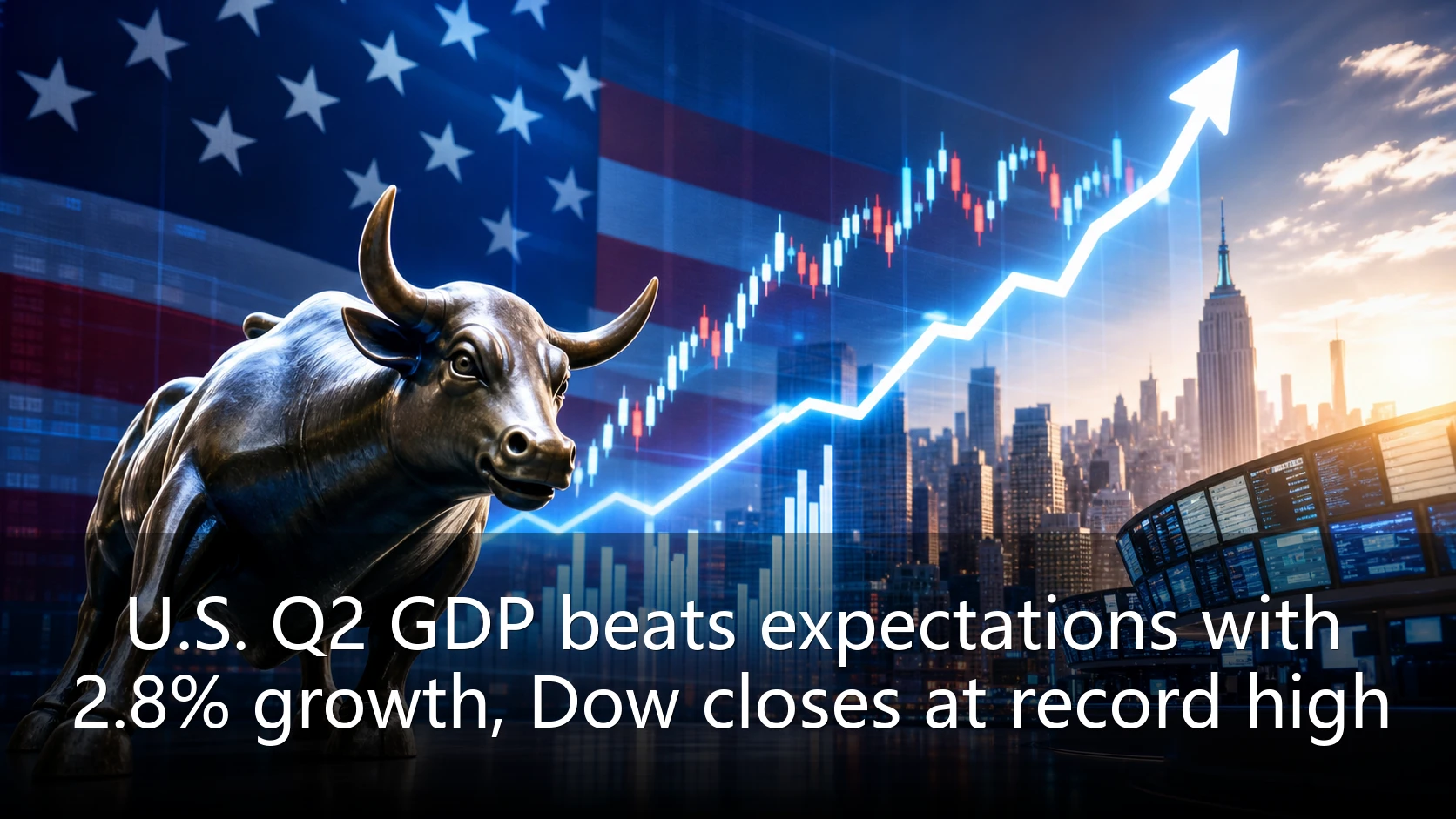
Early August is usually a relative lull for US economic data, but next week's July nonfarm payrolls report hangs over the market like a Sword of Damocles. Q2 GDP beat expectations with 2.8% growth, showing resilience and reigniting concerns about Fed rate hikes this year. Strong July payrolls could reinforce the Fed's hawkish stance and pressure high-valuation tech stocks; weaker data could revive bets on a rate-cut window.
Fed Chair Warsh maintained a hawkish tone in his post-meeting remarks last week, but stressed policy would be 'data-dependent.' That uncertainty has kept investors on the sidelines early in August, unwilling to make big bets before key data. Notably, CME rate futures put the odds of a September hike at 45%, up 8 percentage points from a week ago.
Can Sector Rotation Last? History Offers Clues
Historically, after a sharp rally driven by a single tech theme, US stocks tend to see phase rotation. For example, after the AI boom in the first half of 2023, funds shifted to energy and healthcare in the second half. The current macro environment is similar: steady growth, moderating inflation, solid earnings, but pockets of valuation froth.
The S&P 500 trades at about 22.5 times forward earnings, in the 70th percentile of the past decade, while the Nasdaq 100's P/E is 32 times, above the 90th percentile. By contrast, the Dow's P/E is only 18 times, and financials below 15. This valuation gap naturally drives rotation from high to low. Goldman Sachs strategists noted in a recent report that August is typically one of the weakest months for US stocks, but value stocks beat growth stocks 63% of the time.
How Should Investors Respond?
Given the divergence, investors should stay cautious and avoid chasing highs or panic selling. First, the medium- and long-term tech logic is intact—the AI trend remains—but short-term swings may intensify, so dollar-cost averaging or phased entry can reduce timing risk. Second, consider adding reasonably valued, higher-dividend value sectors such as financials, energy and consumer staples as ballast. Finally, watch next week's payrolls and Fed speakers, and adjust positions based on policy expectations.
Outlook: Finding New Leadership Amid Volatility
Looking ahead to August, with earnings season winding down, catalysts shift to macro data. Besides payrolls, CPI, PPI and other inflation gauges will follow. If inflation continues to moderate, US stocks may resume their uptrend after digesting valuations; if data surprise higher, adjustment pressure could intensify. Technically, the S&P 500 has built near-term support around 6,100. If it holds next week, a test of 6,200 is likely; otherwise, a pullback to the 6,000 mark for support is possible.
Overall, US stocks in August will likely see index-level fluctuation with structural divergence. Investors should abandon one-way thinking and focus on main lines: first, quality leaders with strong earnings certainty; second, policy-supported sectors such as new energy and defense. Markets are always uncertain, but divergence often breeds new opportunities.
- Watch for heightened volatility around the nonfarm payrolls release
- Note hints from Fed officials on the rate-hike path
- If tech pullback stabilizes on shrinking volume, it may be a good time to build mid-term positions
- Value sector catch-up rally may last several weeks