

Mynt (GCash Parent) Files IPO: A Fintech Milestone in Southeast Asia
Keywords
GCash; Mynt; IPO; Philippines; Fintech; Globe Telecom; SingTel; Listing
Introduction
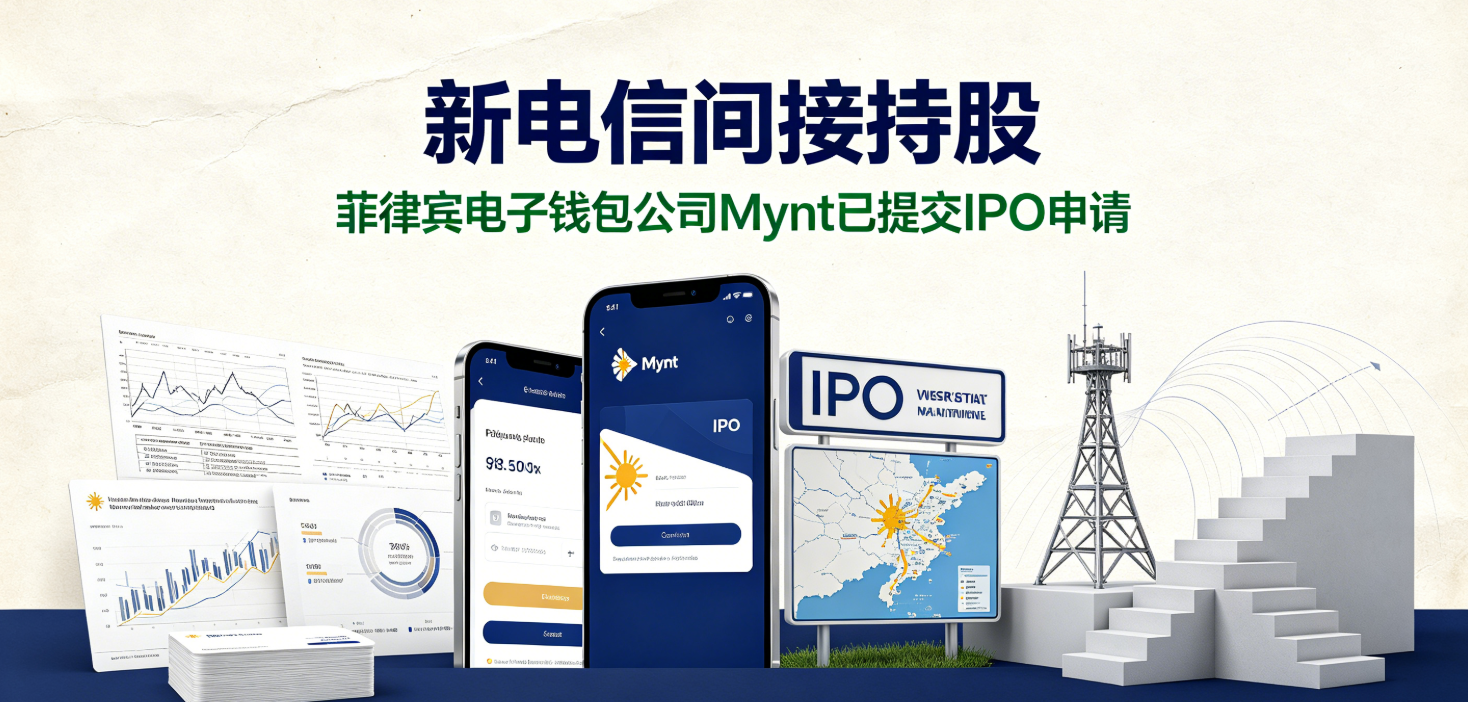
On June 26, 2025, Globe Telecom, a Philippine telecom service provider, announced that Mynt, the fintech company operating the country's most popular e-wallet GCash, had officially filed for an IPO with the Philippine Stock Exchange. The news quickly caught market attention, not only because GCash has over 80 million users in the Philippines and holds an absolute leading position in the mobile payment market, but also because Mynt's potential IPO size could set a new record in Philippine stock market history. As one of the most representative fintech firms in Southeast Asia, Mynt's IPO journey is not just about a company's capitalization path, but also reflects the evolving digital finance ecosystem in the Philippines and the wider Southeast Asia.
Part 1: IPO Plan - Size and Timeline
According to Mynt's IPO filing documents, the company plans to offer 12% of its equity through the initial public offering, including secondary shares from existing shareholders and new shares issued by the company, aiming to raise approximately $1 billion (about S$1.28 billion), corresponding to a valuation of at least $8 billion. However, Bloomberg previously cited sources saying Mynt hopes to increase the fundraising size to $1.5 billion — if achieved, it would surpass the over $1 billion IPO record set by food giant Monde Nissin in 2021, becoming the largest new stock issuance in Philippine capital market history.
It should be emphasized that this IPO application still requires formal approval from the Philippine Securities and Exchange Commission (SEC) and the Philippine Stock Exchange (PSE). Mynt stated that it will disclose more details at an appropriate time, and has not yet announced the final offering price range and listing schedule. According to industry expectations, if approval goes smoothly, Mynt is expected to complete its listing in the second half or fourth quarter of 2026.
The choice of this time window is strategically significant. On one hand, the Philippine economy continues to recover from the pandemic, with digital payment penetration accelerating, providing solid fundamental support for fintech companies. On the other hand, the global capital market's valuation system for Southeast Asian tech stocks is undergoing adjustments. By choosing to list in 2026, Mynt gives itself enough time to improve governance structure while avoiding the current period of high interest rates that generally pressure tech stock valuations.
Part 2: Shareholder Structure and Strategic Synergies
Mynt's ownership structure is highly diversified, bringing together giants from telecom, finance, and technology sectors. Globe Telecom, as the second-largest telecom operator in the Philippines, holds a significant stake in Mynt. Globe itself is a joint venture of Singtel in the Philippines, so Singtel has indirect ownership in Mynt. On June 29, Singtel confirmed this information in an announcement on the Singapore Exchange.
Besides Globe and Singtel, Mynt's shareholder base also includes Ayala Corp, a historic Philippine business conglomerate, China's fintech giant Ant Group, and Japan's Mitsubishi UFJ Financial Group. This shareholder mix gives Mynt unique resource endowments: Globe provides telecom infrastructure and extensive user reach; Ayala's deep involvement in real estate, banking, and energy supports GCash's offline scenario expansion; Ant Group brings Alipay's mature experience in technology architecture, risk management, and inclusive finance; and Mitsubishi UFJ helps open up opportunities in cross-border payments and institutional business.
COL Financial Group previously noted that existing shareholders like Globe and Ayala will benefit significantly from Mynt's IPO. For example, at an $8 billion valuation, Globe's stake in Mynt would be worth over $2 billion, positively impacting the listed company's own market cap and financial performance. Singtel, as Globe's joint venture partner, will also share in this capital feast.
Part 3: Market Impact and Stock Price Reaction
Following the IPO filing news, market reaction was not uniformly optimistic. Singtel's stock weakened after opening on June 29, falling 0.68% to S$4.40 by around 2:40 pm. This reflects investors' cautious stance on IPO pricing, dilution effects, and overall market sentiment. However, analysts noted that Singtel, as a diversified telecom group, is more affected by the broader market environment and interest rate expectations; the long-term value from Mynt's listing is yet to be realized.
For the Philippine capital market, if Mynt successfully lists at an $8 billion valuation or higher, it would greatly boost investor confidence. Currently, the Philippine stock market has a total market cap of about $300 billion, with very few representative fintech companies. Mynt's listing not only offers local investors a direct opportunity to participate in the digital economy's growth but also attracts more international capital to the Philippine market. Moreover, its IPO pricing could serve as an important anchor for valuations of other fintech companies in the future.
Part 4: Opportunities and Challenges for Philippine Fintech
GCash's success is no accident. The Philippines has over 110 million people, but traditional banking coverage has long been low, with over 70% of adults unbanked. GCash filled this gap by offering one-stop financial services including transfers, payments, loans, insurance, and investments via a mobile app. By 2025, GCash had over 50 million monthly active users and rising transaction volumes, becoming a core infrastructure of the Philippine digital economy.
However, Mynt faces multiple challenges in its IPO sprint. First is regulatory uncertainty. The Bangko Sentral ng Pilipinas (BSP) has strengthened oversight of e-money and digital payment institutions, including capital adequacy, anti-money laundering compliance, and consumer protection. Mynt must ensure its business model aligns with regulatory expectations to avoid compliance risks before listing.
Second is intensifying competition. Besides GCash, local rivals like PayMaya exist, and international players such as Alipay and WeChat Pay are actively expanding in Southeast Asia. Although GCash currently leads, maintaining market share requires continuous technology investment and scenario innovation.
Additionally, Mynt's profitability remains to be proven. Fintech companies often go through long periods of user acquisition and losses. Whether Mynt can demonstrate a sustainable profit model after listing will be key to its long-term stock performance.
Conclusion
Mynt's IPO filing with the Philippine Stock Exchange is not only a landmark event in Philippine fintech history but also marks the transition of Southeast Asian digital inclusive finance from a "growth story" to a "capitalization phase." If the $1-1.5 billion fundraising is achieved, it will break Philippine IPO records and provide global investors with a vital window into a leading fintech firm in an emerging market. For existing shareholders Globe, Singtel, Ayala, and Ant Group, the value realization from the IPO is undoubtedly a strategic victory. But for the capital market, Mynt's real test has just begun: after earning the title "Philippines' Alipay," it must prove it can not only run fast but also run steadily and far. Over the next two years, as the listing process advances and business deepens, Mynt's performance will continue to captivate fintech investors in Southeast Asia and beyond.