

US-Iran Peace Deal Ignites Asia-Pacific Tech Stocks, HBM4E Chip Breakthrough Leads New Semiconductor Era
Keywords: HBM4E; SK Hynix; Bank of Japan; US-Iran Deal; Semiconductor Memory; AI Memory; Nikkei 225; KOSPI; Yen Exchange Rate; MR-MUF
Introduction: Dual Resonance of Geopolitics and Technology
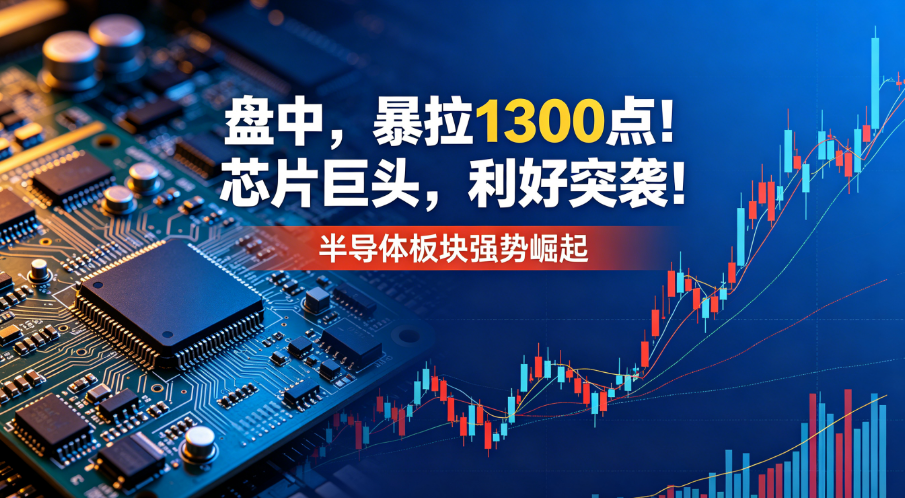
In June 2025, global financial markets witnessed a rally driven jointly by geopolitical easing and semiconductor technology breakthroughs. The news of the US and Iran signing a memorandum of understanding acted like a shot of adrenaline, significantly boosting market risk appetite. On June 18, Japan's Nikkei 225 index soared over 1,300 points at one point, up more than 2%, extending its record high; South Korea's KOSPI index also hit a new record, rising over 1% intraday. Nasdaq futures expanded gains to 1.4%, and US chip stocks surged in after-hours trading, with Nvidia, ARM, Micron Technology, and others strengthening.
The core driver of this rally came not only from the easing of Middle East geopolitical risks but also from major progress in underlying memory technology for the AI supply chain—SK Hynix officially delivered 12-layer next-generation HBM4E chip samples to key customers. This high-bandwidth memory chip's breakthroughs in performance, power efficiency, and thermal management mark a new phase in the global AI memory race. This article will deeply analyze the market dynamics from three dimensions: geopolitics, macroeconomic policy, and semiconductor technology, with a focus on HBM4E's technical architecture, process innovations, and industry impact.
I. US-Iran Peace Deal: Catalyst for Risk Appetite
1.1 Global Impact of the Memorandum of Understanding
On June 16 local time, the US and Iran reached a preliminary agreement to sign a ceasefire memorandum. This news quickly transmitted to global financial markets: crude oil prices fell, demand for safe-haven assets weakened, and funds flowed from bonds and gold into equities. Asia-Pacific markets reacted first, with the Nikkei 225 and KOSPI hitting new highs together, and US and European stock index futures also rose.
From a technical analysis perspective, the easing of Middle East tensions directly reduced uncertainty about energy prices, providing breathing room for corporate production costs and inflation expectations. Especially for oil-import-dependent Japan and South Korea, the expectation of lower crude costs helps improve trade conditions and ease imported inflation. This is precisely why Bank of Japan Deputy Governor Shinichi Uchida explicitly "welcomed the US-Iran peace developments" in his post-meeting statement—a stable energy environment creates more favorable external conditions for monetary policy normalization.
1.2 Risk Appetite Transmission and Tech Stock Linkage
Notably, tech stocks and the semiconductor sector performed exceptionally well in this market rebound. In Japan, SoftBank Group rose over 4%, Kioxia and Renesas Electronics gained nearly 3%, and Murata Manufacturing surged as much as 17%. In South Korea, SK Hynix rose over 4% to hit a new high. This structural rally is no coincidence: declining geopolitical risks, combined with sustained AI demand, have made investors willing to pay higher premiums for high-growth tech assets. The US-Iran deal lowered systemic risk premiums, while the commercialization progress of cutting-edge technologies like HBM4E provided earnings certainty, together forming a "Davis Double Play."
II. Japanese Stock Market and Central Bank Policy: The Rate Hike Cycle Game
2.1 Yen Exchange Rate and Policy Dilemma
While Japanese stocks hit new highs, the yen weakened against the US dollar. On the morning of June 18, the yen fell to 160.82, approaching the market's psychological bottom. Behind this contradiction lies the game between the BoJ's rate hike pace and market expectations.
On June 16, the BoJ raised its policy rate from 0.75% to 1.0%, the highest in 31 years. The statement noted that rising crude oil prices are pushing corporate price pass-through at a "slightly faster" pace, posing a risk that inflation could exceed the 2% target. However, the market was not satisfied with this hike. Overnight index swaps indicate about an 80% probability of another BoJ rate hike by year-end. In an economist survey, about 90% of respondents expect a further rate increase by December.
Monex forex trader Andrew Hazlett commented: "The Fed meeting hinted at a hawkish policy shift, which pushed up the dollar and drove the yen to a level where intervention must be considered." While a weaker yen benefits exporters (like semiconductor equipment and auto makers), rising import costs exacerbate inflation, forming a negative "exchange rate-inflation" spiral. Investors worry that the BoJ's rate hike pace isn't enough to control prices, and this uncertainty has instead increased short positions on the yen.
2.2 Logic Behind Stock Market Rally
Despite the exchange rate pressure, Japanese stocks rose sharply due to two factors: first, the boost from the US-Iran deal to risk appetite; second, the explosive structural demand for AI and semiconductors. SoftBank Group, as a global tech investment giant holding shares in many AI-related companies, naturally became a target for funds. Murata Manufacturing and Renesas Electronics, as component suppliers, benefit from data center and AI chip demand expansion. Notably, defense companies like Mitsubishi Heavy Industries were initially dragged down by the easing of US-Iran relations but later stabilized as global defense spending expectations adjusted, showing that the market is pricing different sectors separately.
III. South Korean Market and HBM4E: Technology Breakthrough Leading Industry Upgrade
3.1 SK Hynix's HBM4E Sample Delivery
The direct catalyst for the KOSPI's record high came from a major technology milestone by memory chip giant SK Hynix. On June 18, SK Hynix announced it had delivered 12-layer next-generation HBM4E chip samples to core customers. This further solidifies the company's technological leadership in the HBM space.
HBM (High Bandwidth Memory) is a DRAM that uses Through-Silicon Via (TSV) and micro-bump technology for high-density stacking, mainly used in HPC and AI accelerators. HBM4E is an enhanced version of HBM4, with significant improvements in data rate, capacity, power efficiency, and thermal management. According to SK Hynix, HBM4E achieves a maximum data processing speed of 16Gbps per pin, power efficiency improved over 20% compared to the previous HBM4, and thermal resistance reduced by 17%, ensuring stable operation under heavy AI training and inference loads.
3.2 Technical Deep Dive: MR-MUF and Stacking Architecture
The most critical process innovation in HBM4E is the use of advanced MR-MUF (Mass Reflow Molded Underfill) technology. MR-MUF is a mass reflow molded underfill technique that enables tight stacking of 12 DRAM dies without sacrificing signal integrity, achieving a single-chip capacity of 48GB. Compared with the previous generation HBM4, MR-MUF offers three advantages:
- Structural Stability: By filling gaps between dies with molding material, it reduces warpage caused by thermal stress, greatly improving the reliability of 12-layer stacking.
- Thermal Management Efficiency: The molding material's superior thermal conductivity reduces thermal resistance by 17% compared to traditional underfill materials, crucial for AI chips with power consumption often reaching hundreds of watts.
- Production Yield: The mass reflow process shortens production cycles and lowers manufacturing costs, laying the foundation for mass production.
SK Hynix President and Chief Development Officer Ahn Hyun said: "Leveraging our experience in mass production and supply of HBM3, HBM3E, and HBM4, we have successfully provided optimized memory solutions to customers. HBM4E will support next-generation infrastructure construction and help solve AI system bottlenecks, backed by market-proven product reliability and supply capability."
3.3 Competitive Landscape: Samsung vs. SK Hynix "Arms Race"
This HBM4E sample delivery comes about a month after Samsung Electronics began shipping HBM4E samples. In mid-May, Samsung announced it had provided initial 12-layer HBM4E samples to customers, claiming they were the world's first shipments of next-generation AI memory products. SK Hynix followed closely, explicitly disclosing that customers include AI giants like AMD, Nvidia, and Google. The competition between the two Korean memory giants in HBM has entered a white-hot phase.
From technical parameters, SK Hynix's 12-layer HBM4E has slight advantages in power efficiency and thermal resistance optimization, but Samsung has scale advantages in advanced packaging production lines. Both use similar advanced packaging technologies (Samsung calls it "HCB" or Hybrid Copper Bonding), but process details differ. The direct beneficiaries of this "arms race" are AI chip makers: faster HBM iterations mean higher memory bandwidth and lower power consumption, driving continuous improvement in large model training efficiency.
3.4 Far-Reaching Implications for the AI Industry
HBM4E is positioned as a "full-stack AI memory chip," with significance far beyond traditional memory upgrades. Given the computing demands of current large language models (LLMs) and multimodal AI, data movement between GPUs and HBM has become a performance bottleneck. HBM4E's 16Gbps data transfer rate is 2.5 times higher than HBM4's 6.4Gbps, significantly reducing data movement overhead in AI training. Additionally, its 48GB single-chip capacity allows larger memory per GPU, reducing communication delays during parameter parallelism.
For AMD, Nvidia, and Google, getting HBM4E samples early means they can gain a competitive edge in developing next-generation AI accelerators (e.g., Nvidia's Rubin architecture or AMD's Instinct MI400 series). The rapid iteration by SK Hynix and Samsung alleviates the "memory wall" pressure on AI chip makers, substantially compressing the upgrade cycle for the entire AI ecosystem.
IV. Conclusion and Outlook: A New Market Paradigm Driven by Technology
The Asia-Pacific stock rally triggered by the US-Iran peace deal is not merely a simple risk appetite rebound but a "macro easing + tech breakthrough" dual resonance. The BoJ's rate hike combined with a weaker yen exposes the dilemma of monetary policy tools in addressing inflation and exchange rates; while the HBM4E sample delivery by Korean memory giants demonstrates semiconductor technology's fundamental ability to reshape economic structures.
Looking ahead, several points deserve ongoing attention:
- Geopolitical Uncertainty: The memorandum still needs parliamentary approval from various parties, and Middle East volatility risks remain. Investors should be wary of black swan events' short-term impact on risk appetite.
- BoJ Rate Hike Path: If inflation data continues to exceed the 2% target, the BoJ may further raise rates to 1.25% in July or September, potentially triggering a turnaround in the yen and pressuring export-oriented firms' valuations.
- HBM4E Mass Production Timeline: SK Hynix and Samsung's mass production schedules will determine AI chip supply in H2 2025. If 12-layer HBM4E enters full production by end-2025, it will accelerate shipments of Nvidia B200 and subsequent products, providing sustained impetus to the server supply chain.
- AI Computing Density Increase: HBM4E's 20% power efficiency improvement and 17% thermal resistance reduction mean that under the same power budget, data centers can deploy more AI accelerators, placing higher demands on cooling solutions, server power supplies, and other supporting segments.
Overall, the US-Iran peace deal provides short-term emotional catalysts for the market, while HBM4E's technological breakthroughs lay the material foundation for AI industry upgrades. Under their combined effect, Asia-Pacific tech stocks are entering a new upward cycle led by technological innovation. Investors should closely monitor memory chip capacity progress and macro policy changes to capture structural opportunities amid volatility.